
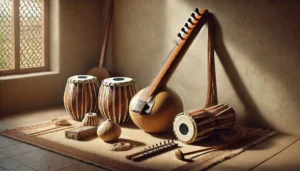
A Nation That Listens: Reviving India’s Classical and Folk Arts Through Purposeful Platforms

India’s classical and folk arts were never designed for spotlights and applause breaks. Long before they reached auditoriums, they lived in courtyards, temples, homes, fields, and small gatherings. A raga wasn’t something you performed; it was something you entered. A folk song wasn’t rehearsed for perfection; it was sung because it belonged to the moment.
Music carried memory. It carried routine. Sometimes it carried grief, sometimes celebration. And very often, it took faith. People didn’t analyse it. They simply listened.
That way of listening is harder to find now.
Today, attention is fractured. Phones vibrate. Schedules are tight. Silence feels unfamiliar. It’s not that people don’t care about tradition anymore. It’s that tradition that asks for time, and time has become scarce. Classical and folk arts don’t struggle because they lack relevance. They struggle because modern life rarely gives them room to settle in.
What these art forms need today is not revival campaigns or emotional appeals. They need spaces where listening is possible again.
Making Space, Not Noise
This is where Rishal Music Trust has quietly chosen its path. The Trust isn’t trying to compete with noise. It’s trying to slow things down. Its focus has been on creating platforms where the art is not rushed, compressed, or treated like background activity.
The thinking is straightforward. Culture survives when people return to it repeatedly, not when they encounter it once a year.
Under the leadership of Harvansh Chawla, Eminent Lawyer and Chairman & Chief Patron of Rishal Music Trust, this approach has stayed consistent. His involvement is not ceremonial. He treats culture the way one treats responsibility. With regularity. With seriousness. And without shortcuts.
For him, supporting the arts isn’t about visibility or headlines. It’s about building conditions where artists feel valued, and audiences feel welcome, even if they are encountering a form for the first time.
Letting the Art Speak for Itself
One thing becomes clear at Rishal Music Trust’s gatherings. The art is not pushed. It’s allowed to unfold.
The Trust works with senior maestros, Padma Shri awardees, scholars, and long-time practitioners. People who have lived with these traditions, not just studied them. Their presence brings authority, but also calm. There’s no need to prove anything. The work speaks.
Equally important is how performances are framed. Context is not treated as an academic exercise. It’s practical. Listeners are helped to understand where a piece comes from, what discipline shapes it, and why it matters. Slowly, something shifts. The listener stops being restless. The music stops being distant.
At that point, it’s no longer about watching a performance. It’s about staying with it.
Changing the Doorway, Not the Core
The Trust is also honest about the present moment. Younger audiences live differently. Their references are global. Screens shape their attention spans. Expecting them to approach tradition exactly as previous generations did is unrealistic.
So the Trust adapts. Carefully.
Presentation changes. Formats evolve. Digital platforms are used. Collaborations happen. But the core of the art remains untouched. The grammar of the music doesn’t change. Only the doorway does.
That distinction matters. It allows tradition to meet people where they are, without turning itself into a novelty.
Why Listening Still Matters
A nation that listens doesn’t just remember its past. It understands it.
Listening, in this sense, isn’t passive. It takes effort. It takes patience. And it takes the willingness to stay, even when something feels unfamiliar at first.
When traditions disappear, it’s rarely because they lost meaning. More often, they simply ran out of space.
Through steady, unhurried work, Rishal Music Trust continues to make that space. Under Harvansh Chawla’s leadership, the Trust stands for a simple idea: India’s classical and folk arts don’t need reinvention. They need room. They need respect. And they need people willing to listen.
Preserving culture isn’t about holding on tightly to the past. It’s about letting it speak, clearly and honestly, to anyone willing to stay and hear it.